 |
|
|
|
|
|
|
|
|
|
|
|
|
|
|
|
|
 |
|
|||||||||||||||
 |
 |
|
||||||||||||||
 |
 |
 |
 |
 |
 |
 |
 |
 |
 |
|
||||||
 |
 |
 |
 |
 |
 |
 |
|
|||||||||
 |
 |
|
||||||||||||||
 |
 |
|
||||||||||||||
 |
|
|||||||||||||||
| View unanswered posts | View active topics |
It is currently Sat Aug 08, 2026 8:36 am |
|
All times are UTC - 6 hours [ DST ] |
Forum rules
- n00bfest is not the special olympics. It is a gaming community. Do not act like n00bfest is a retard daycare or you will be punished.
- Outright flames and flamebaiting will be punished.
- Even if you are not an adult, do your best to act like one.
- *NEW* Political/Religious News and NSFW posts do not belong here. Use the Videos, Links, Political/Religious News Discussion Forum
- Punishments range from warnings to permanent forum/gameserver bans.

|
Page 1 of 1 |
[ 20 posts ] |
| Previous topic | Next topic |
Economy sucks ass
| Author | Message |
|---|---|
|
[n00b] Member  Joined: Sat Mar 22, 2008 11:00 pm Posts: 542 Location: NY 
|
 Economy sucks ass Economy sucks assI sell cars and let me tell you. this is some bull shit. no one can get approved unless you have A type credit. if your credit score is less than 700 F*CKIN forget it. I need to start a fundraiser to pay my mortgage. F*CK and the worst part is everyone is buying these jap cars, i got an idea...BUY AMERICAN OR SHUT THE F*CK UP AND STOP COMPLAINING ABOUT THE ECONOMY. Kodak employees are buying Fuji film and GM employees are buying hyundai and toyota. WTF is wrong with this country. Are money is worth less than canada's. Wake up America...Lets get our shit together.
Thats my rant for the day. any opinions on this country's economy? |
| Wed Oct 15, 2008 2:35 pm |

|
|
|
|
[n00b] Member  Joined: Sat Mar 01, 2008 12:00 am Posts: 987 Location: Ottawa, Canada
|
Canada ♥
|
| Wed Oct 15, 2008 3:46 pm |

|
|
|
|
[n00b] Member  Joined: Thu Jul 07, 2005 11:00 pm Posts: 3955 Location: ATX->NYC
|
Low prices ♥
_________________ [n00b] Judicator|n4b nubs 4 breakfast  |
| Wed Oct 15, 2008 4:25 pm |
|
|
|
|
Sexual Chocolate  Joined: Thu Apr 29, 2004 11:00 pm Posts: 3202 Location: nigga plz.
|
when american auto makers start making a quality product like the japs(VEHICLES NOT SHIRTS), then you might see your business get better
when we pull our heads out of our rich asses and start living within our means, life will get better. |
| Wed Oct 15, 2008 4:43 pm |

|
|
|
|
[n00b] Member  Joined: Sun Mar 05, 2006 12:00 am Posts: 3216 Location: Michigan
|
high wrote: when american auto makers start making a quality product like the japs(VEHICLES NOT SHIRTS), then you might see your business get better when we pull our heads out of our rich asses and start living within our means, life will get better. Buying anything post 2001 and you are asking for a hunk of shit. Stupid soccer moms and there fancy car shit. |
| Wed Oct 15, 2008 6:24 pm |
|
|
|
|
Lazer Jesus  Joined: Fri Nov 12, 2004 12:00 am Posts: 8983 Location: Georgia
|
You cannot sustain an economy based on money-maximization. You have to run it on resource-maximization or else this happens.
_________________ I got a sex change. |
| Wed Oct 15, 2008 7:02 pm |
|
|
|
|
[n00b] Member  Joined: Sat Sep 24, 2005 11:00 pm Posts: 791 Location: Terrebonne, OR
|
Yeah, this sucks ass. My GF is a dog breeder, and I thought when I moved in with her I would be set for life.
Well, 1st things that go with a recession are Luxury Items....Looks like I am going to be working 24/7 at the local Shell station to pay for my kid's 2 potato chip rations at dinner Yellow_Flash_Colorz_PDT_37 _________________ French never surrender, We simply tactically retreat to fight another day SEIJIsaurusREX wrote: Haha alright, enjoy living in this shithole full of n00bs you skill-less assface I am 63% addicted to Counterstrike. What about you? |
| Thu Oct 16, 2008 8:37 pm |
|
|
|
|
[n00b] Member  Joined: Sun Nov 27, 2005 12:00 am Posts: 981 Location: ATX
|
Re: Economy sucks ass Ruger9 wrote: Are money is worth less than canada's. http://www.google.com/search?hl=en&clie ... tnG=Search 1 U.S. dollar = 1.17769955 Canadian dollars _________________ [n00b] madcoweater {n4b} nubs 4 breakfast |
| Fri Oct 17, 2008 12:12 am |
|
|
|
|
[n00b] Member  Joined: Fri Aug 29, 2008 11:00 pm Posts: 92 Location: Trois-Rivieres,Qc, Canada
|
high wrote: when american auto makers start making a quality product like the japs(VEHICLES NOT SHIRTS), then you might see your business get better when we pull our heads out of our rich asses and start living within our means, life will get better. |
| Fri Oct 17, 2008 1:04 am |
|
|
|
|
[n00b] Member  Joined: Thu Jan 05, 2006 12:00 am Posts: 8388 Location: London
|
Judicator wrote: Dicks ♥ Fag. |
| Fri Oct 17, 2008 1:15 am |
|
|
|
|
[HNIC] Stзamroller ω
Joined: Sun Apr 25, 2004 11:00 pm Posts: 13453
|
If your credit score is low then it's likely because you did something stupid. You either bought something you couldn't afford, got lazy and didn't make payments on time, or didn't bother to build credit at all. It's easy as hell to build credit.
My credit score rules. It's 720ish, and I only have two accounts on my credit: mortgage and car. I've never made a payment late, though.. ever. Also, central Texas isn't seeing the recession/depression as hard because Austin is so F*CKING bad ass. tl;dr be a man and get a real job rather than bitching and blaming banks for your financial problems _________________  I hate to advocate drugs, alcohol, violence, or insanity to anyone, but they've always worked for me. -- Hunter S Thompson |
| Fri Oct 17, 2008 1:15 am |
|
|
|
|
[n00b] Member Joined: Thu Jan 05, 2006 12:00 am Posts: 8388 Location: London
|
Gman wrote: I'm good, you're not. Stop crying It really was tl;dr material. Helpin' you out Big Guy. |
| Fri Oct 17, 2008 1:17 am |
|
|
|
|
[HNIC] Stзamroller ω
Joined: Sun Apr 25, 2004 11:00 pm Posts: 13453
|
Thanks honey. Couple grams of Vicodin and I'm not on top of my game.
_________________ I hate to advocate drugs, alcohol, violence, or insanity to anyone, but they've always worked for me. -- Hunter S Thompson |
| Fri Oct 17, 2008 1:25 am |
|
|
|
|
[n00b] Member
Joined: Sat Oct 22, 2005 11:00 pm Posts: 2436
|
More blue collar jobs.
_________________  |
| Fri Oct 17, 2008 6:58 am |
|
|
|
|
[n00b] Member  Joined: Sat Feb 19, 2005 12:00 am Posts: 2559 Location: Tampa, FL
|
You think it's bad now... Just wait for Obama to spread the wealth!

http://en.wikipedia.org/wiki/Class_warfare http://en.wikipedia.org/wiki/Proletariat Socialism at it's best! Google Obama and the Black Panthers. Google Obama and Black Liberation Theology http://www.npr.org/blogs/news/2008/01/b ... uence.html http://socialismandliberation.org/mag/index.php?aid=690 Remembering the Black Panthers An example of revolutionary defiance and militancy By Carlos ‘Carlito’ Rovira The Panthers’ action at the California Statehouse in 1967 launched them onto the national spotlight. Forty years ago, in October 1966, the Black Panther Party was born. This was one of the highlights in the history of the U.S. revolutionary movement, and the Black liberation struggle in particular. http://www.socialistaction.org/black.htm Black Liberation & Socialism Racism is a major pillar that props up American capitalism. Workers are divided against themselves along the lines of race so deeply, that there can be no successful socialist revolution in the U.S. unless it's a “combined revolution” that supports the right of African-Americans to self-determination. That is why we defend Black nationalism, and support the right of all oppressed nationalities in general to form their own autonomous movements and formulate their own demands. We’ve set up this page to post materials on this very important question, as well as reports on the anti-racist and national liberation struggles within the borders of the U.S. We welcome your feedback. http://www.resistancebooks.com/catalog/ ... cts_id=678 A sharp and insightful analysis of historic movements against racism in the United States—from the separatism of Marcus Garvey, to the militancy of Malcolm X and the Black Panther Party, to the eloquence of Martin Luther King, Jr., and much more—with essential lessons for today’s struggles. In the 40 years since the civil rights movement, many gains have been made—but there is still far to go to win genuine change. Here is a badly needed primer on the history and future of struggle against racism. “Black Liberation and Socialism is a brilliant examination of the intersection of race and class in the United States. Shawki's rich historical analyses come with powerful theoretical insights into the relationship between anti-racist struggles and the fight for a liberated future for all. This book is essential reading for students of African American history and for activists involved in the struggle against racism today.” --Nagesh Rao, assistant professor, Post-colonial Studies, College of New Jersey “The civil rights and black power movements of the late 1950s and 1960s had a profound effect on American society. The mass mobilisations to end segregation in the South helped break the stranglehold of McCarthyism and conservatism that dominated US politics. The black power movement of the late 1960s represented a further radicalisation of the movement involving thousands of activists, black and white, in political activity. Decades later the situation is completely different. There has been a steady erosion of the gains blacks won in the 1960s. The vast majority of African Americans are poverty stricken and many are the victims of brutal racist violence.” Suppose that every day, ten men go out for beer and the bill for all ten comes to $100. If they paid their bill the way we pay our taxes,it would go something like this: The first four men (the poorest) would pay nothing. The fifth would pay $1. The sixth would pay $3. The seventh would pay $7. The eighth would pay $12. The ninth would pay $18. The tenth man (the richest) would pay $59. So, that’s what they decided to do. The ten men drank in the bar every day and seemed quite happy with the arrangement, until one day, the owner threw them a curve. ‘Since you are all such good customers,’ he said, ‘I’m going to reduce the cost of your daily beer by $20.’ Drinks for the ten now cost just $80. The group still wanted to pay their bill the way we pay our taxes so the first four men were unaffected. They would still drink for free. But what about the other six men - the paying customers? How could they divide the $20 windfall so that everyone would get his ‘fair share?’ They realized that $20 divided by six is $3.33. But if they subtracted that from everybody’s share, then the fifth man and the sixth man would each end up being paid to drink his beer. So, the bar owner suggested that it would be fair to reduce each man’s bill by roughly the same amount, and he proceeded to work out the amounts each should pay. And so: The fifth man, like the first four, now paid nothing (100%savings). The sixth now paid $2 instead of $3 (33%savings). The seventh now pay $5 instead of $7 (28%savings). The eighth now paid $9 instead of $12 (25% savings). The ninth now paid $14 instead of $18 (22% savings). The tenth now paid $49 instead of $59 (16% savings). Each of the six was better off than before. And the first four continued to drink for free. But once outside the restaurant, the men began to compare their savings. ‘I only got a dollar out of the $20,’declared the sixth man. He pointed to the tenth man,’ but he got $10!’ ‘Yeah, that’s right,’ exclaimed the fifth man. ‘I only saved a dollar, too. It’s unfair that he got ten times more than I got’ ‘That’s true!!’ shouted the seventh man. ‘Why should he get $10 back when I got only two? The wealthy get all the breaks!’ ‘Wait a minute,’ yelled the first four men in unison. ‘We didn’t get anything at all. The system exploits the poor!’ The nine men surrounded the tenth and beat him up. The next night the tenth man didn’t show up for drinks so the nine sat down and had beers without him. But when it came time to pay the bill, they discovered something important. They didn’t have enough money between all of them for even half of the bill! And that, ladies and gentlemen, journalists and college professors, is how our tax system works!! The people who pay the highest taxes get the most benefit from a tax reduction. Tax them too much, attack them for being wealthy, and they just may not show up anymore. In fact, they might start drinking overseas where the atmosphere is somewhat friendlier. David R. Kamerschen, Ph.D. Professor of Economics University of Georgia _________________     |
| Fri Oct 17, 2008 8:24 am |
|
|
|
|
[n00b] Member Joined: Thu Jan 05, 2006 12:00 am Posts: 8388 Location: London
|
AAAAAUGH
THIS THREAD HAS BEEN DURANGO'D! |
| Fri Oct 17, 2008 1:05 pm |
|
|
|
|
[n00b] Member Joined: Thu Jul 07, 2005 11:00 pm Posts: 3955 Location: ATX->NYC
|
ApoKolypse wrote: Judicator wrote: Dicks ♥ Join the club. When are meetings? And ohnoez thread hijacked :/ _________________ [n00b] Judicator|n4b nubs 4 breakfast |
| Fri Oct 17, 2008 1:13 pm |
|
|
|
|
[n00b] Member Joined: Thu Jan 05, 2006 12:00 am Posts: 8388 Location: London
|
I was looking for 15 minutes of a good car accident photo involving a Durango so I could caption it "THIS THREAD HATH BEEN DURANGO'D"
but I gave up. Either way, I propose the terrorist name for thread-hijackers be the TaliBanned |
| Fri Oct 17, 2008 2:00 pm |
|
|
|
|
Forum Newbie  Joined: Sun Oct 12, 2008 11:00 pm Posts: 16 Location: Quebec
|
dont laught ab out my english because im a frenchies i think the best country on this earth is .... CANADA but not all the province of canada only Quebec xD no its a joke .... buy american car because its the best (DODGE) you know all people buy japanese or chinese car but its a shit ... you should buy more american product sorry if you dont understand but i try to explain my opinion the bad economy is our fault !
|
| Fri Oct 17, 2008 2:13 pm |
|
|
|
|
[n00b] Member Joined: Sat Feb 19, 2005 12:00 am Posts: 2559 Location: Tampa, FL
|
ApoKolypse wrote: I was looking for 15 minutes of a good car accident photo involving a Durango so I could caption it "THIS THREAD HATH BEEN DURANGO'D" but I gave up. Either way, I propose the terrorist name for thread-hijackers be the TaliBanned 
Apok, they are looking for you. Yellow_Flash_Colorz_PDT_02 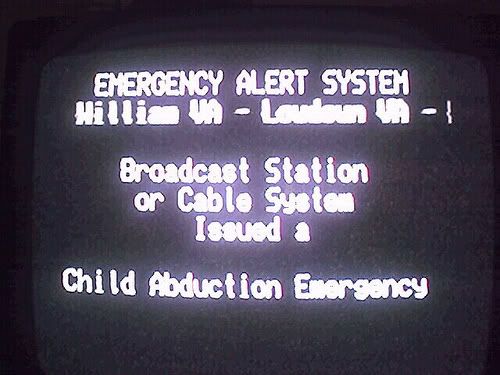 _________________ |
| Fri Oct 17, 2008 2:26 pm |
|
|
|
|
|
Page 1 of 1 |
[ 20 posts ] |
|
All times are UTC - 6 hours [ DST ] |
Who is online |
Users browsing this forum: No registered users and 66 guests |
| You cannot post new topics in this forum You cannot reply to topics in this forum You cannot edit your posts in this forum You cannot delete your posts in this forum You cannot post attachments in this forum |